
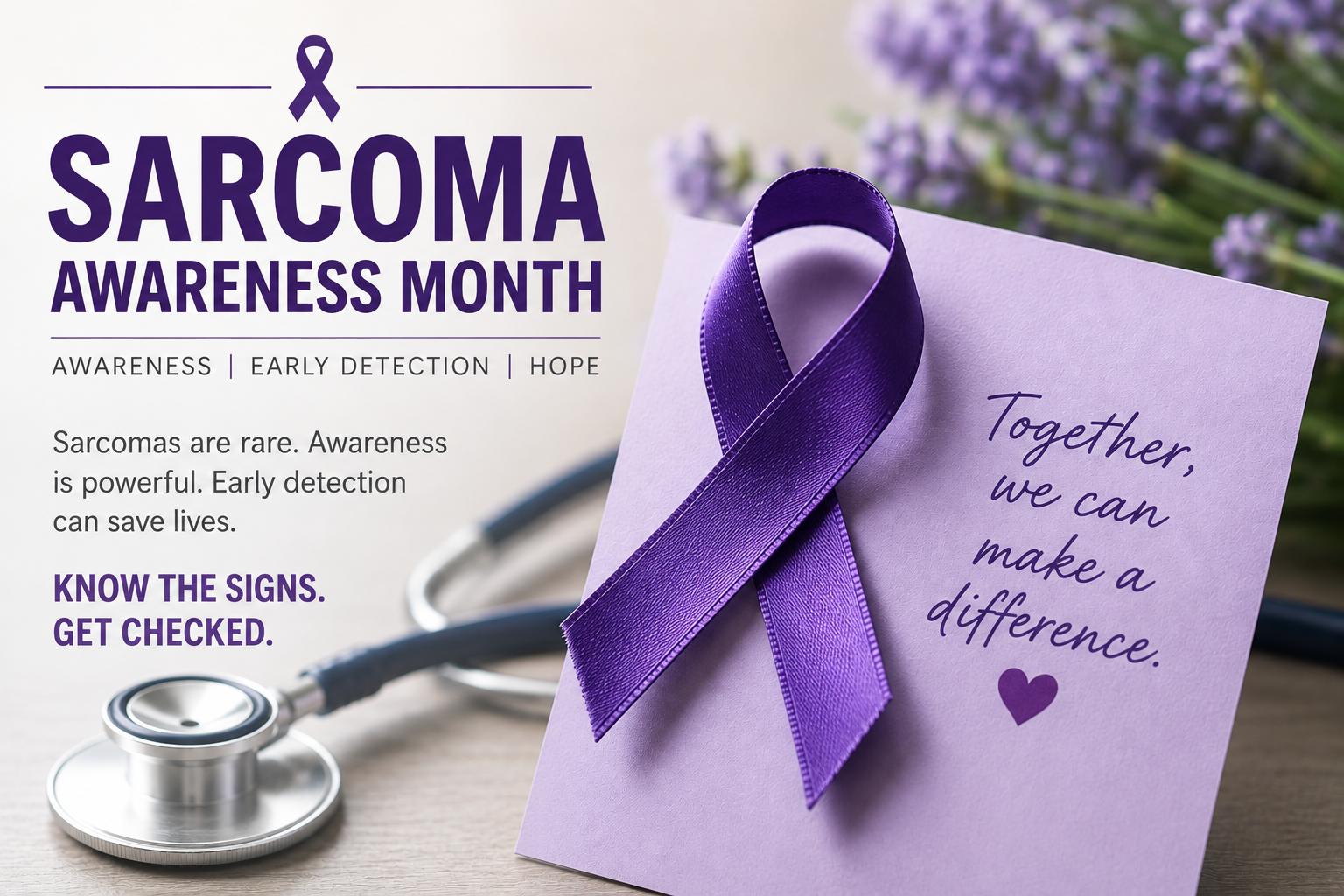
Each July, Sarcoma awareness month shines a light on one of the rarest forms of cancer. Sarcomas account for only 1% of adult cancers but can affect people of all ages, including children and young adults. This awareness month encourages individuals to recognize potential warning signs, seek medical evaluation when something doesn’t seem right and understand the importance of early diagnosis.
What is Sarcoma?
Sarcoma is a rare type of cancer that develops in the body’s connective tissues, including bones, muscles, fat, tendons, blood vessels and cartilage. There are more than 70 different subtypes of sarcoma, with two main categories being soft tissue sarcoma and bone sarcomas. Because these cancers can develop almost anywhere in the body, they are often difficult to detect in their early stages.
Know The Warning Signs
Many sarcomas begin with few or no symptoms. As the tumor grows, individuals may experience:
- A lump or swelling that continues to increase in size.
- Persistent pain in a bone or soft tissue.
- Swelling around a bone or joint
- Limited movement in an arm or leg
- Unexplained fractures
- Abdominal pain or a feeling of fullness if the tumor develops internally.
Any lump that continues to grow, becomes painful or measures larger than a golf ball should be evaluated by a healthcare provider. While these symptoms do not always indicate cancer, prompt medical attention is always important.
Risk Factors
Most Sarcomas develop without a known cause. However, certain inherited genetic conditions, previous radiation therapy, long-term lymphedema and exposure to specific chemicals may increase the risk for some individuals.
Pikeville Medical Center is Here for You
At Pikeville Medical Center (PMC), our multidisciplinary team is committed to providing compassionate, patient-centered cancer care close to home. Through advanced diagnostic imaging, pathology services and personalized treatment plans, we work with patients and their families every step of the way.
During sarcoma awareness month, PMC encourages everyone to become familiar with the signs and symptoms of sarcoma and to speak with a healthcare provider if they notice any unusual changes. Early detection remains one of the most important tools in improving outcomes for patients facing this rare disease.
For more information about cancer services at PMC visit https://www.pmcky.org/cancer