
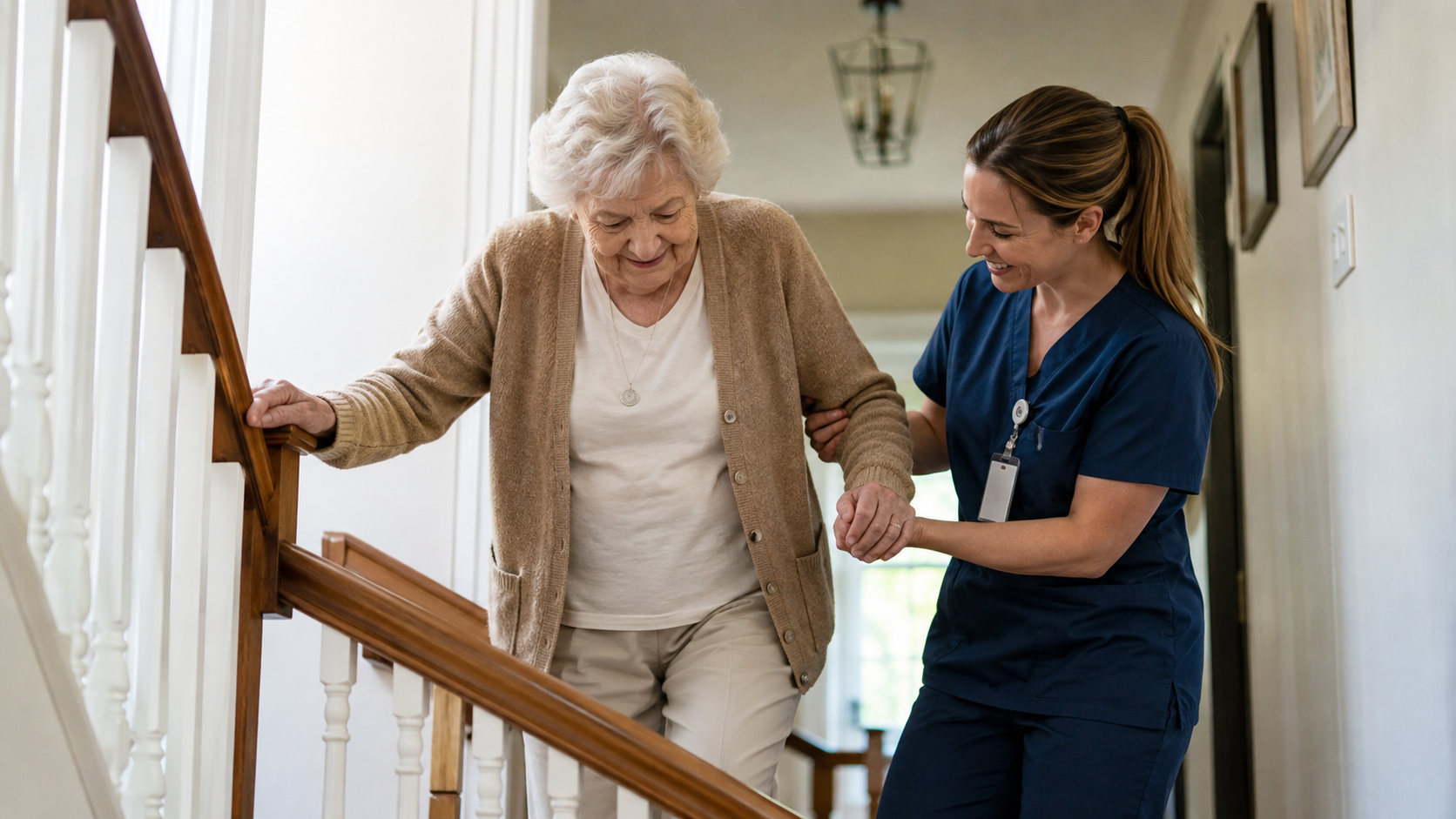
One fall can change your entire life. Even something as minor as slipping on a wet floor or tripping on stairs can lead to serious health issues that may result in long-term disability or even death. It is well known that the risk of falling increases with age, and one in four people aged 65 or older experiences a life-altering fall. The fear of falling can persist, leading people to avoid activities such as walking, shopping or socializing. However, it doesn’t have to be this way.
There are precautions you can take to reduce your risk of falling. The first step is to make an appointment with your primary care provider (PCP) to discuss your risk. From there, they can help decide the next step and offer some ways you can prevent falling. Be prepared to discuss your medications, any previous fall history and any health conditions. Some of those may include the following:
- Stay active. With a health care provider’s permission, consider doing physical activities such as walking, swimming, Zumba or tai chi, a free-flowing exercise that involves slow, graceful motions. Doing even the smallest exercises can help you gain strength, balance, coordination and flexibility. If you are afraid of falling from movement, talk to your provider. They may recommend specific exercises or refer you to a physical therapist who can help create a custom exercise plan.
- Consider proper footwear. Shoes such as high heels, floppy slippers and shoes with slick soles can put you at risk for a fall, as well as walking with only socks on. Instead, opt for properly fitting, flat shoes with nonskid soles.
- Remove home hazards. Look around your home for potential fall hazards. Remove any stray items like cords or boxes from walkways, secure loose furniture like rugs, move items from high-traffic areas and invest in nonslip mats in your bathtub or shower.
- Light up your living space. Placing night lights throughout the home, making clear paths to light switches and storing flashlights in easy-to-find places can help you avoid tripping on objects that are hard to see.
- Use adhesive devices. Your PCP might recommend using a cane or walker to keep you steady. Other adhesive devices that may help include handrails, nonslip treads, a raised toilet seat or one with armrests and a grab bar or plastic seat for the shower.
If necessary, your PCP may refer you to an occupational or physical therapist either by recommendation or at your request. Occupational and physical therapists can help you develop additional fall prevention strategies. Some device-based strategies can be easily installed, while others may require professional help.
Though falls are incredibly common, taking the necessary steps towards fall prevention can potentially save lives. The fear of falling does not have to put your daily life on hold. By following the tips above, you can reduce your risk of falling and avoid injury.
To learn more about occupational and physical therapy services at Pikeville Medical Center (PMC), visit www.pmcky.org/outpatient-rehabilitation-services or call 606-430-3500.
What To Do If I Fall?
Whether you are at home or somewhere else, a sudden fall can be startling and upsetting. If you do fall, stay as calm as possible and take the following steps:
- Take several deep breaths to try to relax, and remain still on the floor or ground for a few moments. This will help you get over the shock of falling.
- Make sure you are not hurt. Getting up too quickly or in the wrong way can worsen an injury.
- Crawl to a sturdy chair. If you think you can get up safely without help, roll over onto your side. Slowly get up on your hands and knees, and crawl to a sturdy chair that you can use to get up.
- Get help. If you are hurt or cannot get up on your own, ask someone for help or call 911. If you are alone, try to get into a comfortable position and wait for help to arrive. Stay prepared by keeping a well-charged cordless or mobile phone with you at all times and arrange for daily contact with a friend or loved one.
Even if you feel okay after a fall, it is important to see a healthcare professional immediately. This way, they can perform an assessment to make sure you did not sustain any injuries.