
Bones do more than just support the body: they store essential minerals, anchor muscles for movement and produce blood cells. While it is important to build strong bones during childhood and adolescence, physicians also encourage adults to practice habits to support their bone health.
As the body grows and changes, it breaks down and rebuilds bone through a process called remodeling. For older adults, this process slows, and individuals lose more bone mass than they gain, potentially leading to conditions like osteoporosis.
Osteoporosis is a condition that causes bones to become weak and easily broken. It occurs when the body loses too much bone, makes too little bone or both. Anyone can develop osteoporosis, but older adults, women, those with a family history of the disease and those with low intake of essential minerals such as calcium are more likely to be at risk.
While there is no cure for osteoporosis, it can be prevented or managed through healthy lifestyle choices, getting essential vitamins and regular doctor visits.
Keeping Bones Healthy
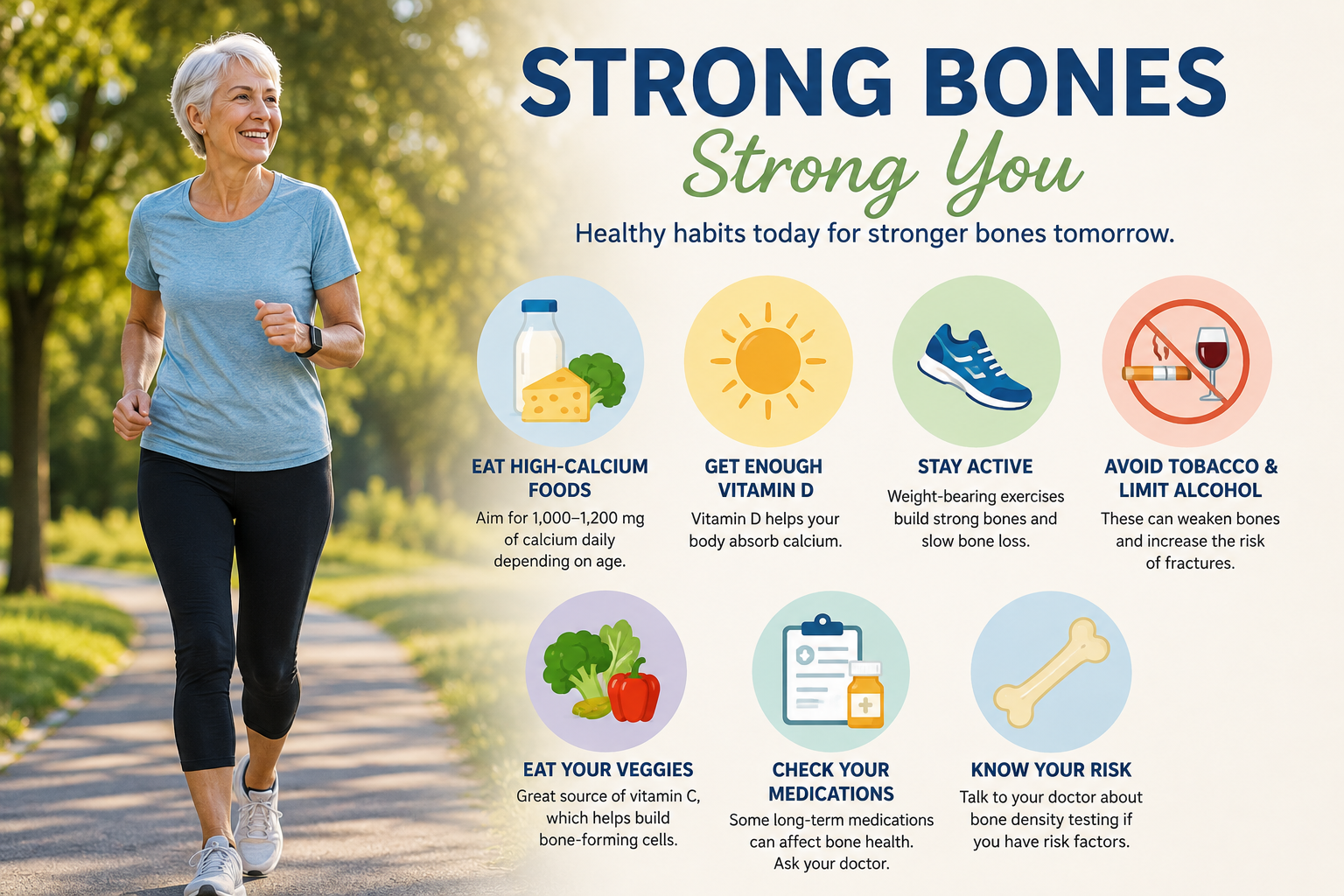
- Eat high-calcium foods. For adults ages 19 to 50 and men ages 51 to 70, the Recommended Dietary Allowance (RDA) is 1,000 milligrams (mg) of calcium a day. The recommendation goes to 1,200 mg a day for women age 51 and older and for men age 71 and older.
- Get enough vitamin D. Vitamin D helps the body absorb calcium.
- Stay active. Weight-bearing exercises can help you build strong bones and slow bone loss.
- Do not use tobacco or drink excessively. If you’d like help to stop using tobacco, talk to your healthcare professional. If you choose to drink alcohol, do so in moderation.
- Include vegetables in your diet. Vegetables are great for bone health because they are one of the best sources of vitamin C, which stimulates the production of bone-forming cells.
- Ask about your medications. If you are on long-term medication, ask your healthcare professional if that might affect your bones. If so, talk about steps you can take to keep your bones healthy.
Patients who are concerned about their bone health or have risk factors for osteoporosis are encouraged to talk to their primary care provider (PCP). To learn more about orthopedic services at PMC, call 606-430-2206 or visit www.pmcky.org/orthopedic-center.
Specialty Sports Care at PMC
Pikeville Medical Center (PMC) offers specialized services for patients with unexpected orthopedic injuries. On weekdays, between 8 a.m. and 9 a.m., the Orthopedic Surgery and Sports Medicine Institute of Eastern Kentucky at PMC provides a walk-in clinic on the 6th floor of the PMC Clinic Building where a dedicated orthopedic physician can see patients.
At the PMC Orthopedic walk-in clinic, Dr. Jamie Varney sees both adults and adolescents who have experienced injuries such as sprains, strains, shin splints, dislocated joints, stress fractures and more. Dr. Varney specializes in sports medicine, so patients can rest assured they are seeing a physician trained to treat their orthopedic needs.