
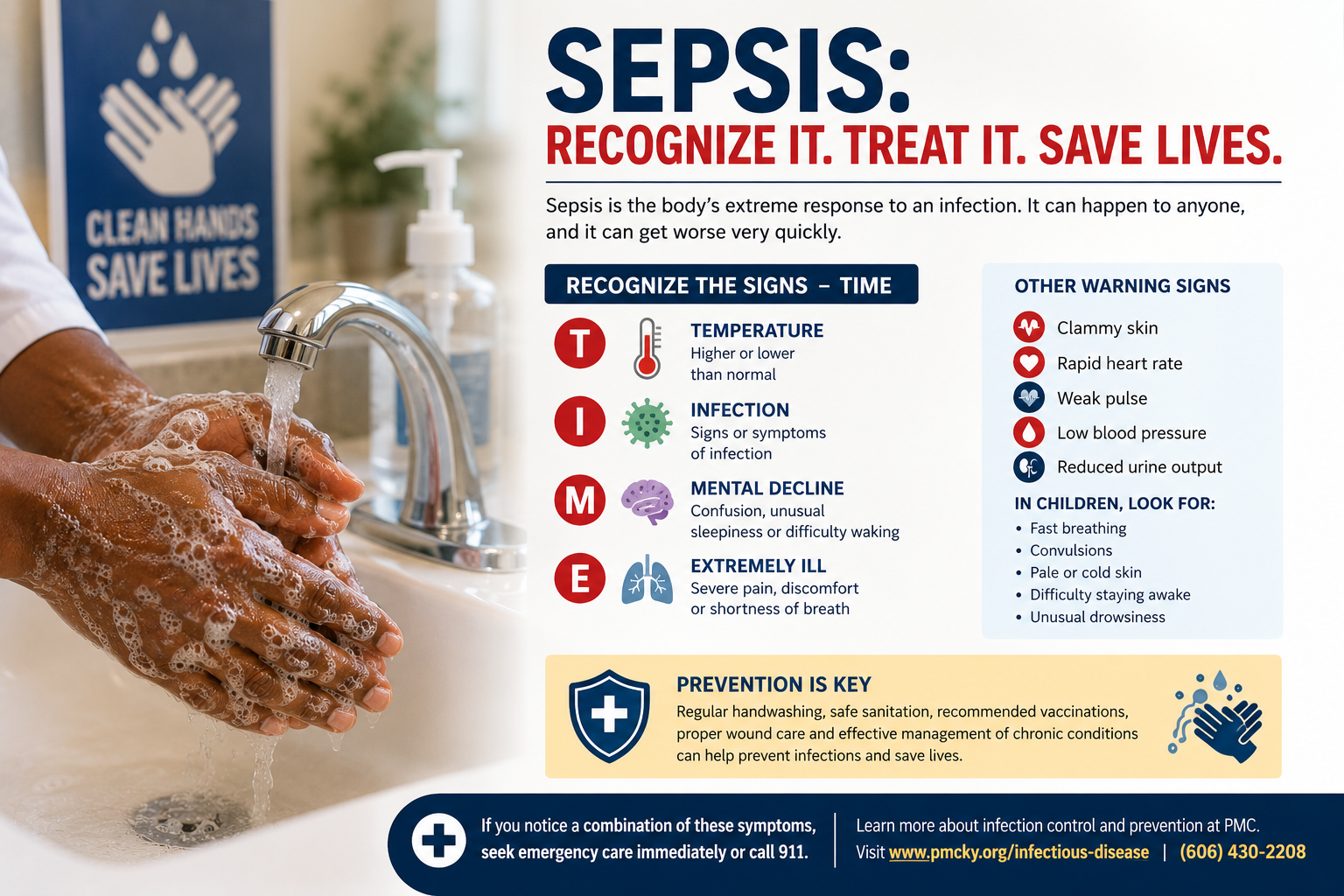
Each year, at least 1.7 million adults and more than 18,000 children in the U.S. develop sepsis, which is caused by a serious infection in the body.
Infectious diseases are caused by bacteria, viruses, fungi, parasites or other types of organisms. These types of diseases can be passed on to another person and are usually transmitted by insect or animal bites, ingesting contaminated food/water or being exposed to environmental organisms. Infectious diseases are also referred to as transmissible or communicable diseases.
Medical professionals at Pikeville Medical Center (PMC) emphasize how sepsis can develop quickly and requires immediate treatment to improve outcomes. The condition occurs when the body’s response to infection causes widespread inflammation, potentially leading to organ failure if not addressed promptly.
If left untreated, sepsis can lead to tissue damage, organ failure, septic shock (dangerously low blood pressure) and death. Patients who show signs of sepsis are encouraged to seek care as soon as possible, since early detection can save lives.
While sepsis can affect anyone, adults over 65, young children and individuals with weak immune systems face a higher risk of developing the condition. Fortunately, everyone can take steps to prevent infections that can lead to sepsis, especially those at higher risk.
Recognizing the Signs
Health experts emphasize the importance of early recognition. One way to identify possible sepsis is by using the acronym TIME:
- Temperature – Higher or lower than normal
- Infection – Signs or symptoms of infection
- Mental Decline – Confusion, unusual sleepiness or difficulty waking
- Extremely Ill – Severe pain, discomfort or shortness of breath
Other warning signs can include clammy skin, rapid heart rate, weak pulse, low blood pressure or reduced urine output. In children, sepsis may appear as fast breathing, convulsions, pale or cold skin, difficulty staying awake or unusual drowsiness.
“If you notice a combination of these symptoms, seek emergency medical care immediately or call 911,” said PMC Infectious Disease Specialist and Medical Director Fadi Al Akhrass, MD, MBA, FACP. “Don’t hesitate to ask, ‘Could it be sepsis?’”
Prevention is Key
While early treatment saves lives, prevention remains the most effective way to reduce the impact of sepsis. Regular handwashing, safe sanitation practices, recommended vaccinations, proper wound care and effective management of chronic health conditions all play a role in stopping infections before they become severe.
At PMC, infection prevention and control are daily priorities. “Our staff is very committed to the prevention and treatment of sepsis,” Dr. Fadi added. “We cannot let our guard down when it comes to patient care. Ongoing education helps make sure our providers and staff are ready to respond quickly and deliver the highest level of care.”
To learn more about infection control and prevention at PMC, visit www.pmcky.org/infectious-disease or call (606) 430-2208.