
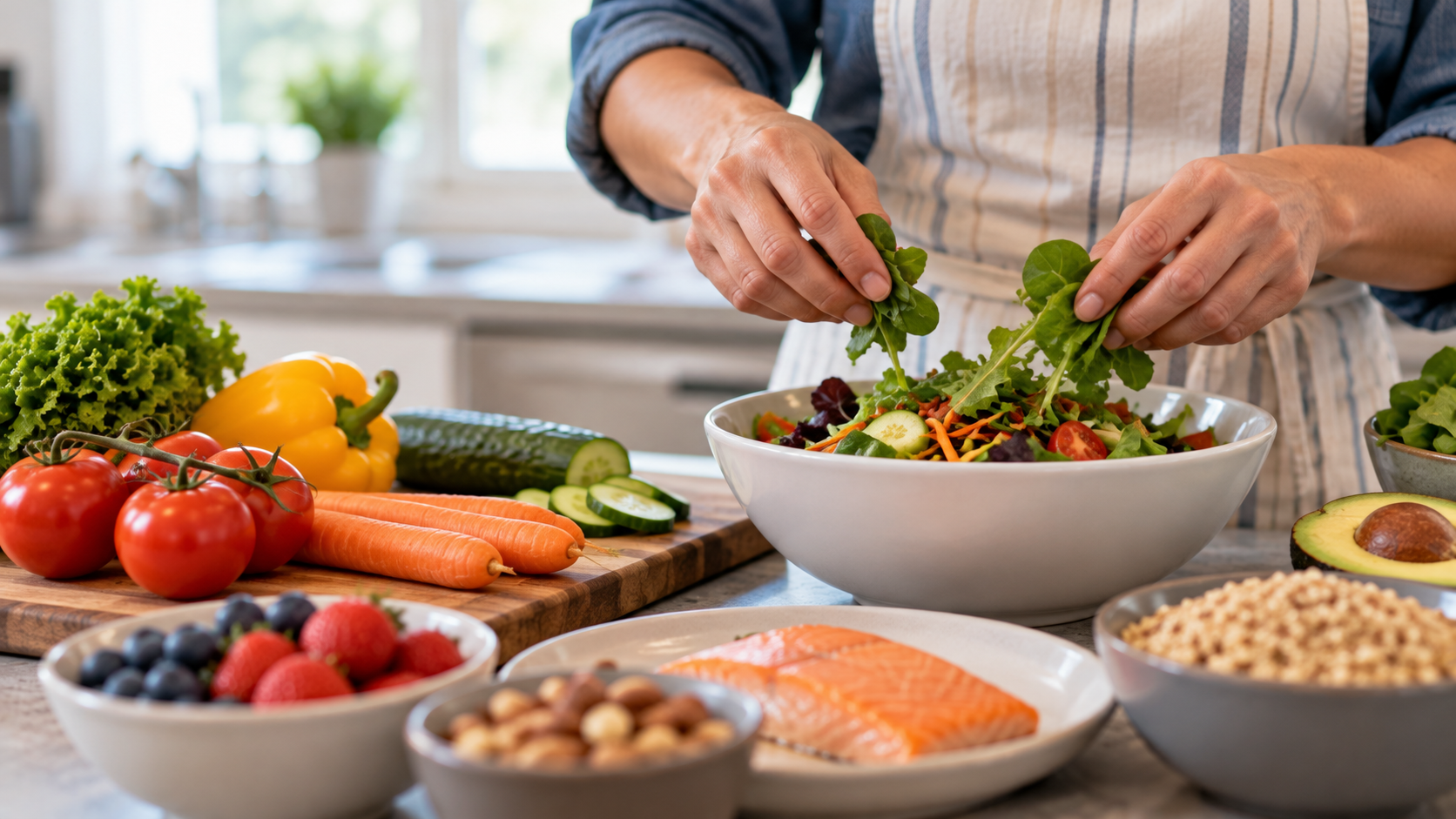
Food is much more than something we eat when we’re hungry. It provides the fuel and nutrients our bodies need every day to function, heal, grow and stay strong. From beating of our hearts to the work of our brains and the movement of our muscles, nearly every process in the body depends on the nutrients we receive from food.
While no single food can prevent or cure disease, a balanced and nutritious diet can be an important part of preventing illness, managing health conditions and supporting overall well-being. In many ways, food can be thought of as part of our body’s daily medicine- a way to provide the vitamins, minerals, fiber and other nutrients our bodies need to work properly.
Build a Plate That Nourishes You
Healthy eating doesn’t have to be complicated. One of the easiest ways to think about nutrition is to focus on variety and balance. Different foods provide different nutrients, so eating a wide range of food helps your body get what it needs.
Fill Half Your Plate with Fruits and Vegetables
Fruits and vegetables are packed with vitamins, minerals, antioxidants and fiber. They can support the immune system, digestive health, heart health, and overall wellness.
Try choosing a variety of colors throughout the week. Leafy greens, broccoli, carrots, tomatoes, berries, oranges, peppers and other colorful produce each provide different nutrients.
Fresh, frozen, and canned fruits and vegetables can all be nutritious choices. If you’re using canned vegetables or fruit, look for options with little or no added sodium or sugar when possible.
Choose Lean Proteins
Protein plays an important role in building and repairing muscles, supporting the immune system and maintaining healthy tissues throughout the body.
Good sources of lean protein include chicken, turkey, fish, eggs, beans, lentils, low-fat dairy products, nuts and seeds. Including protein with meals can also help you feel satisfied and energized throughout the day.
Fish can be an especially beneficial choice because varieties such as salmon, tuna and trout provide protein along with heart-healthy omega-3 fatty acids.
Make Whole Grains Part of Your Diet
Whole grains contain more of the naturally occurring nutrients and fiber found in the grain than refined grains. Fiber can help support digestive health and may also benefit heart health and blood sugar management.
Look for foods such as oatmeal, brown rice, whole-wheat bread and pasta, quinoa, barley and other whole-grain options.
When choosing packaged foods, check the nutrition label to help you identify products that contain whole grains and provide a good source of fiber.
Don’t Forget Healthy Fats
Not all fats are the same. Our bodies need healthy fats to support brain function, absorb certain vitamins and maintain healthy cells.
Foods such as avocados, nuts, seeds, olive oil and fatty fish provide beneficial unsaturated fats. These can be incorporated into meals in simple ways, such as adding avocado to a sandwich, nuts to oatmeal, or olive oil to vegetables.
Water is Part of Nutrition, Too
Hydration is an important part of taking care of your body. Water helps regulate body temperature, transport nutrients, remove waste and support nearly every system in the body.
Making water your primary beverage can help reduce the amount of added sugar you consume from sodas, energy drinks, sweetened teas, and other sugary beverages.
Small Choices Can Make a Big Difference
Healthy eating doesn’t mean you have to completely change your diet or give up the food you enjoy. What matters most is the overall pattern of your eating habits.
Try making small changes that are realistic for your lifestyle. Add an extra serving of vegetables to dinner. Choose fruit instead of a highly processed snack. Try whole-grain bread instead of white bread. Include lean protein with your meals. Keep water nearby throughout the day.
These choices may seem small but repeated consistently; they can become habits that support your health for years to come.
Think of Food as an Investment in Your Health
We often think about healthcare as something that happens in a doctor’s office, but taking care of our health also happens at home around the dinner table. Nutrition is one part of preventive health that we have an opportunity to practice every day.
There is no perfect diet, and healthy eating will look different for everyone. The goal isn’t perfection- its finding a balanced way of eating that provides your body with the nutrients it needs while still allowing you to enjoy food.
On this World Food Day, take a look at what’s on your plate and consider what it is providing for your body.
Food isn’t a sure-all, but it can be one of the most important tools we have for supporting our health.